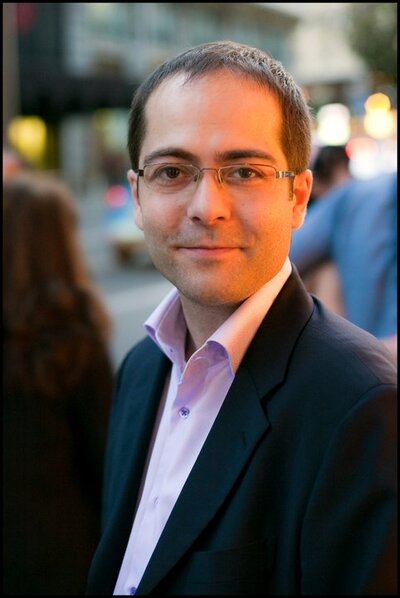
Belgian-Spanish. Serial builder.
I keep the pieces, not the companies.
The Method, Before the Story
Before the companies, the exits, the conference stages, and the autonomous agents — there was a kitchen in Madrid and a bedroom floor covered in Lego.
These two things explain everything that came after.
The kitchen is where I have always gone to think. Every Saturday morning from the age of twelve, my parents drove me to El Alambique — a cooking school in Madrid where, while other kids were playing football, I was learning knife work, timing, and the architecture of flavor. I never stopped going. Decades later, the kitchen remains the one place where I disconnect from the digital world: no screens, no metrics, no roadmaps. Just the honest result of what you put in.
But here is what I've come to understand about cooking: the best meals I make are never from a recipe. Last weekend I opened the refrigerator and found mascarpone, smoked salmon, some herbs, half an onion, and leftover tomato sauce. I pulled prawns from the freezer. No recipe. Just the intuition of what would work together — the mascarpone would round the acidity of the tomato, the smoked salmon would give depth, the prawns would add texture. Thirty minutes later: pasta sauce. Extraordinary, unrepeatable, made entirely from the pieces at hand.
That's not a cooking story. That is my operating system.
I think in French technique, Spanish product, and Belgian comfort. I build companies the same way I build a sauce: I look at what's missing, I feel which pieces belong together, and I start. I don't follow instructions. I never have. And the bedroom floor, where the Lego lived, is where the pattern began.


The Early Deals
I only wanted Lego. Not Playmobil, not action figures, not board games. Just Lego. We had a whole playing room in the basement dedicated to it — pieces everywhere, constructions in every state of assembly and disassembly. I'd build something, look at it for a while, put it on a shelf — and take it apart when I needed the pieces for the next construction. I never followed the instructions twice. I never built the same thing twice. That basement was a permanent construction site. I didn't know it then, but I was rehearsing for every company I would ever start.

There was no shop at the swimming pool in our housing complex. I was seven years old and I saw the problem clearly. So I set up a table, walked to the nearest store — my parents were liberal enough to let me go alone — bought sweets, and sold them to the other kids at a markup. When my sister wanted to spend the earnings, I apparently told her we couldn't: we had to reinvest. I don't remember saying it. She does.
The pattern was already there, operating below the surface. It would take another twenty years to give it a name.
At thirteen, I made a harder decision. The bullying at my previous schools — for being different, for not fitting the mold — had become unbearable. I chose to leave Madrid and go to a boarding school in Geneva. Two years that rebuilt me. I went from being the kid everyone targeted to being one among forty students from across the world, where being different wasn't a liability but the baseline. For the first time, I wasn't the odd one out. I was just one more piece in a box that contained every shape imaginable.
Geneva also offered something more practical: one vending machine, bad prices, no variety. I went to the supermarket, bought in bulk, and offered more products at lower prices than the machine — available after lights out. The school eventually shut me down. But the lesson had already landed.
Back in Madrid at fifteen, I enrolled at Santa María del Pilar. In my first year, I opened the religion textbook and recognized something I wasn't willing to put into my head. There was a law that gave students the right to choose between religion and ethics. I invoked it — the first student to do so, not out of defiance but out of consistency. If I was going to study something, I wanted it to hold up to scrutiny. The priest who examined me didn't particularly like me, but my grades were always above a seven. The following year brought a different teacher: a priest who had survived the Nazi concentration camps, whose classes were a journey through the history of all religions. That year, I chose religion. The content had earned it.
The Stage
At sixteen, I directed Molière's L'Avare — five acts, full production. I bribed the cast with churros on Saturday mornings to make sure they showed up for rehearsals. I won Best Actor.
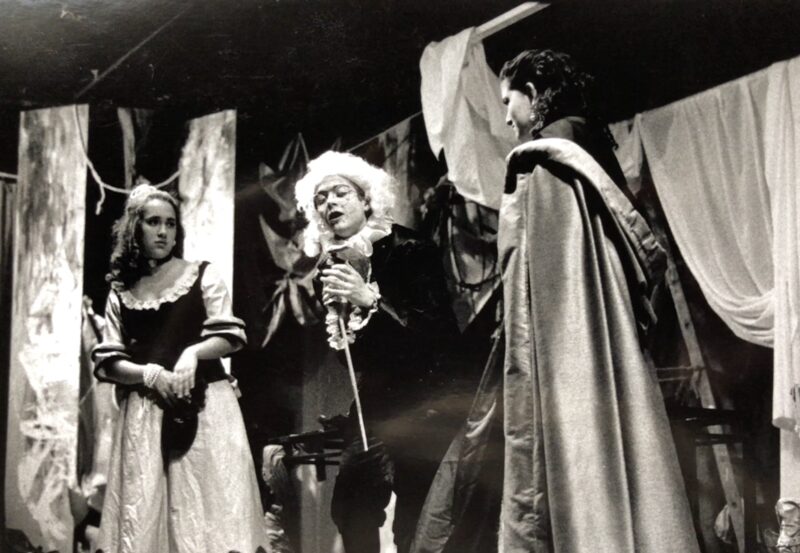
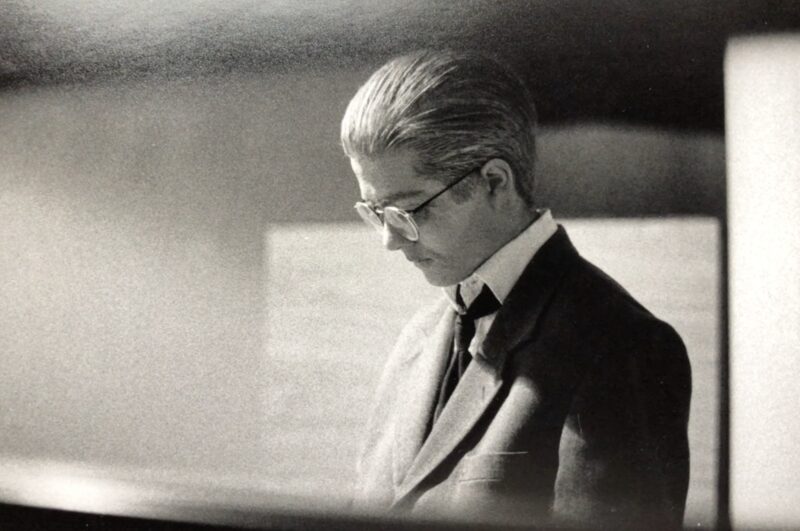
The following year, at seventeen, I played Willy Loman in Arthur Miller's Death of a Salesman. On the night of the dress rehearsal — the day before opening — something broke. I'd gone so deep into a character whose dreams had consumed him that I couldn't come back. I walked off the stage in tears, still carrying Loman's suitcases, and kept walking through the streets. The rest of the cast followed in silence. Nobody said a word. I didn't know what had happened to me.
Looking back, it may have been the first time the wiring in my head showed itself. That story has a fuller telling, and its moment is coming. For now, just know that it happened — and that it matters.
That same year, I convinced an industrial waffle supplier to lend me two machines for our school's European countries expo. I'd chosen Belgium — my birth country, the land of waffles — and with a group of friends we built a logistics chain with same-day restocking from a delivery van. We sold everything before the expo ended.
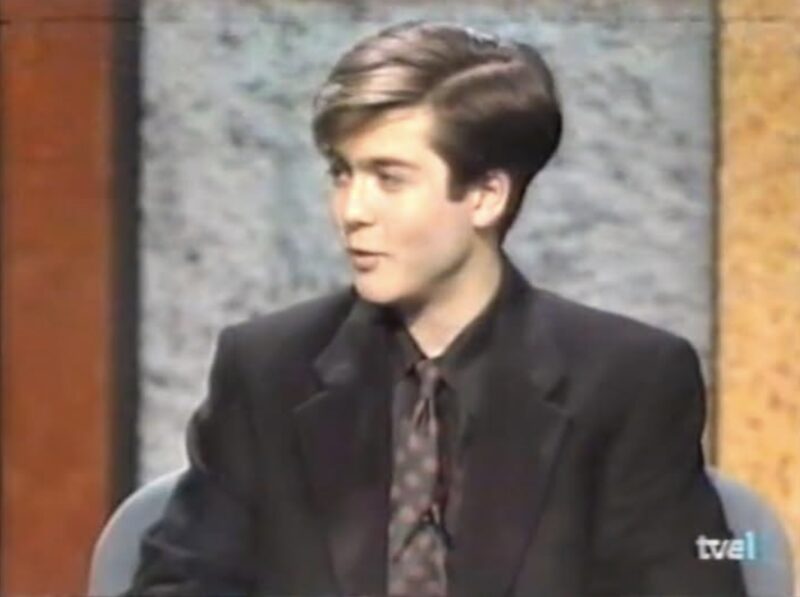
At seventeen, I was already working afternoons as a production runner at TVE — Spanish national television — managing talent backstage for the New Year's Eve broadcast. And it was through this, through simply being useful inside the building, that I ended up at eighteen on the official jury of Eurovision 1993. Not because anyone invited me. Because I was already there, and when you're useful, people stop asking how you got in.
Belgium, the Bar, and the Internet
That same year I moved to Belgium. I'd gone to Louvain-la-Neuve for the best French-speaking drama school in the country. They let me in for two weeks, watched me work, and sent me home. "Not malleable enough." It was the most useful rejection of my life. My mother convinced me to study International Relations at UCLouvain instead. She was probably right — though I still think I should have studied business.
I got a job at a bar with a Spanish friend. We didn't just tend it — we changed the music, turned up the volume, redesigned the energy of the place, and turned it into the hottest spot in town. During the World Cup, I saw an inefficiency: customers wanted beer but didn't want to fight the crowd to order. So I changed the model. I'd load twenty beers onto a tray without anyone asking, walk through the crowd selling on instinct, and collect payment on the return trip. It was faster for me, better for the customer, and the register never stopped ringing.
Push, don't pull. That instinct hasn't changed in thirty years.
I got my first internet connection in 1995. I was twenty, studying at UCLouvain, and the feeling was immediate and unmistakable: something important is happening here, and I need to understand it from the inside. I built a personal website — essentially a blog, years before anyone used that word. I spent hours on IRC arguing with strangers about things that didn't exist yet. I hand-coded the Faculty of Economics website at UCLouvain because nobody else knew how.
During these same years I was working for a company called OFUB that sold press subscriptions to university students. They assigned me to Namur — a city I'd never set foot in, with no contacts, no network. I turned it into the best-performing territory in Belgium. 130% of target. Best Team Manager in the country. They promoted me to Sales Director for all of French-speaking Belgium, and suddenly I had 150 people to hire, train, and manage. Revenue rose 120% from the previous year. I was still finishing my degree.
What I discovered that year wasn't a sales methodology. I discovered I could teach people to sell — not with scripts, but with confidence and method. The skill that mattered wasn't knowing how to close a deal. It was knowing how to make someone believe they could.
The First Construction: OX2
After university, in 2001, I stumbled into a job at Oniros Illusions Studio in Brussels — a video games and internet company — through a chance encounter with an old friend on the street. Within six months they'd put me in charge of the internet division. I was twenty-six and running the most profitable part of a company I hadn't built.
Then a black swan: the other division, video games, had a project canceled at 80% completion. The company went bankrupt, my department included. Most people would have seen the end of something. I saw the pieces.
In March 2003, with €20,000 borrowed from my father, I founded OX2 in Brussels — recruiting my entire former team and keeping every client, because the relationships had been built on competence, not on the company's name. The word "impossible" didn't exist in our office. Within years we were building all digital properties for RTL Group in Belgium and launching more than one hundred websites in over thirty languages for Bridgestone Firestone Europe.
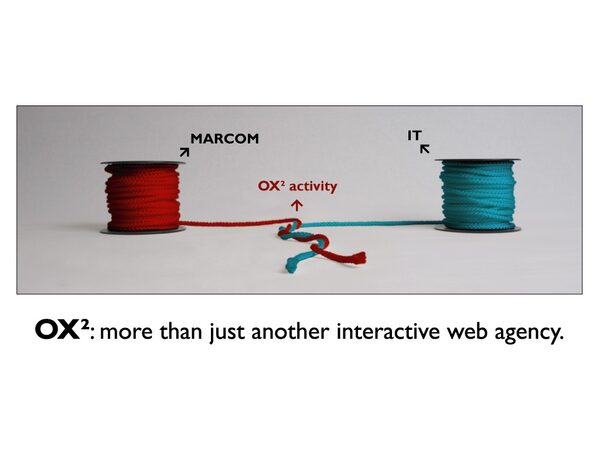

It was also at Solvay Business School, where I enrolled for a Master in eBusiness (2002–2003), that I got the framework to match the impatience I already had. The Master gave me structure. The impatience gave me direction.
OX2 had two divisions from day one: web development built around our own CMS, OniSystem, and a web analytics department that nobody in Europe was quite building yet, at least not the way we were building it. The standard approach at the time was to sell analytics to IT departments, focused on technical performance. We saw it differently: analytics belonged in the hands of marketing, in service of the business. That was the American understanding, and it was barely beginning to cross the Atlantic. We planted a flag and spent two years preaching in the desert before landing our first six-figure contract.
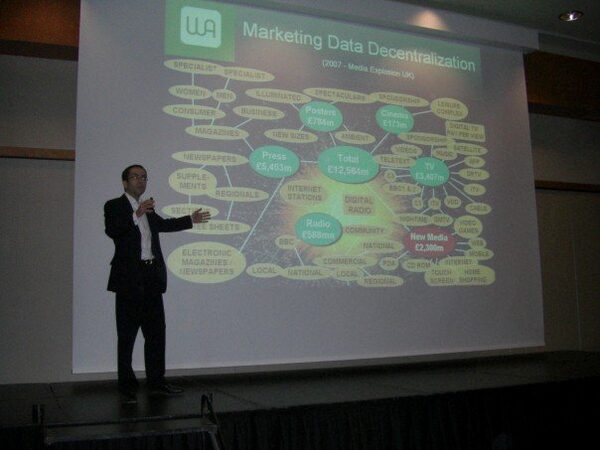
I launched our first blog dedicated to web analytics — one of the only specialist publications of its kind in Europe — and began attending international conferences in the United States, eventually speaking at them. Avinash Kaushik included our blog in his global top ten list. We were the only non-American entry. We became the best partner of WebTrends in Belgium, securing a six-figure contract with Belgacom — the Belgian telecom giant — and won the IAB Belgium Efficiency Award in 2006 for our work with Panos, a case later cited in Kaushik's Web Analytics 2.0. I also served as Country Manager for Belgium at the Web Analytics Association, organizing industry events nationally.
In 2006, I built native A/B testing and behavioral targeting directly into OniSystem and published a white paper on it. Optimizely didn't exist yet. I was building what the market would take years to name.
Eric T. Peterson — who had literally written the textbook on web analytics — joined OX2's Board of Directors as a shareholder. By 2007, Forrester named us a European leader in web analytics services.
"René unites in his working personality three attitudes you rarely find together in one person: true commitment, passion and endless energy. His love, wit and overall contribution to the web analytics industry is tremendous."Oliver Schiffers · Digital Marketing & Customer Experience Lead · Web Analytics Association
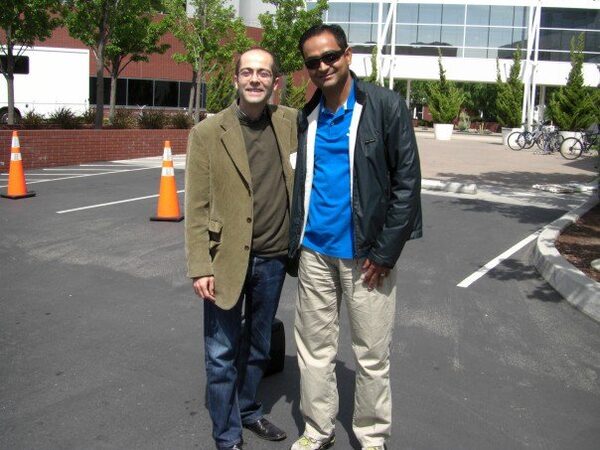
That same year, I flew to San Francisco with an idea that seemed absurd: get the four people who had invented web analytics into the same room, live, with cameras rolling. I organized it within eMetrics San Francisco — the main global conference for the industry — and convinced Avinash Kaushik, Eric Peterson, Jim Sterne, and Bryan Eisenberg to sit in front of a camera together for the first time. I called it "4 Gurus For You." It became the first live-streamed analytics debate in history. During that conversation, Bryan Eisenberg articulated the 10/20/70 rule — one of the most cited frameworks in the industry. All four of them eventually became my business partners.
I was thirty-two.
"One of the most forward-thinking business people I know in all of Europe."Eric T. Peterson · Author, Web Analytics Demystified · Director & Shareholder, OX2
The Exit
In 2007, my wife and I found out we were expecting our first child. I decided it was the moment to sell my first child — the company — before having a second. I found two interested buyers and began what became the most clarifying two hours of my professional life.
A Friday afternoon. A restaurant. Four hours with the CEO, COO, and CFO of LBi — a group listed on international markets, later acquired by Publicis. Chemistry arrived early. The problem: LBi's local executives couldn't make the decision. The global CEO would have to come.
He came on Tuesday. I walked in with a presentation, and on the final slide I'd placed six boxes — an idea from my adviser Pieter Casneuf. Three on top, already filled with everything the competing offer had on the table: upfront payment, earn-out potential, team protection. Three below, left blank. His to fill.
When I reached that slide, he asked whether he needed to answer right there and then.
I hadn't planned what came out of my mouth. "No — my wife and I will go downstairs for a cigarette. Talk it through, and call us when you're ready."
I think I smoked three or four cigarettes waiting. We were called back up. He offered more money upfront, a better earn-out structure with a timeline compressed from three years to one — and a guarantee that no one on the team would be let go. I looked at my wife. Turned back to the Texan CEO with the boots to match, extended my hand, and said: "We have a deal."
In January 2008, OX2 sold for close to €1.5 million. I shared a portion with the employees who had believed early enough to hold equity. The earn-out came in at 60% above target.
Five years from nothing to exit. Not because of a plan — because of a feeling, a team, and knowing when the construction was complete.
"His ability to merge all of these together with an innate sense of how best to conduct business — profitably but fairly, competitively but in a spirit of community."Jim Sterne · Founder, eMetrics Summit & Digital Analytics Association · Author of 13 books
Taking It Apart
LBi stayed for a year. I stayed long enough to hand over the relationships I'd built. And then I left — the way I always leave. Not with regret, not with relief. With the specific, quiet satisfaction of someone who has taken a Lego set apart and is already thinking about the next construction.
I moved to Madrid in 2009. What came next was fast and layered and exactly how I work.
NextStage Analytics was the first build. Their technology could predict the gender and age of a web visitor through behavioral analysis — digital phenotyping before anyone had named it. At eMetrics Washington that year, in my hotel suite over the days of the conference, I held a series of conversations with people who came to understand what we'd built. One of them was a Gartner analyst, who was impressed enough to include the technology in their Cool Vendor Report. Not because I lobbied for it. Because he saw what it was.
Competing on Privacy came next — data privacy consulting in 2009, when most European companies still thought cookies were something you ate. Then SteelMood, working with Endesa, Carrefour, and Citroën. Each one a bet on a market that wasn't quite ready yet. Some worked. All taught.
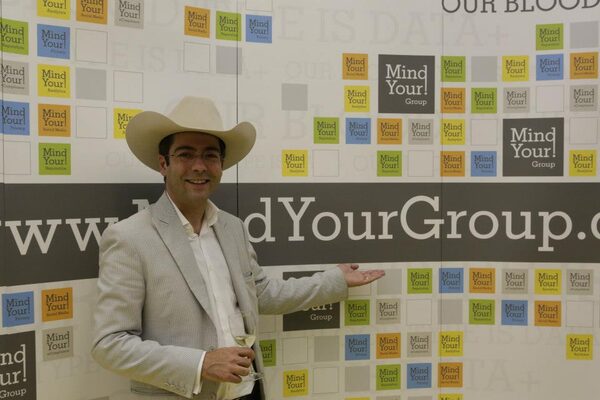
In 2012, I founded Mind Your Group. The partners read like an unlikely fiction: Avinash Kaushik, Google's Digital Marketing Evangelist. Jim Sterne, founder of the eMetrics conference and the Digital Analytics Association. Bryan and Jeffrey Eisenberg, New York Times bestselling authors. The four people who had essentially created the digital analytics industry chose to build with me. Clients followed: Repsol, L'Oréal, BBVA, National Geographic.
A few months after launching Mind Your Group, I was in my garden with a paperboard — my low-tech thinking tool — and I started drawing what I saw when I looked at the internet whole. Not as a technology or a channel, but as a connected system of business processes where every piece had a function and a relationship to every other piece. What took shape that afternoon was the MYG Bow Tie: acquisition feeding into persuasion, conversion at the center, then dialogue, amplification, advocacy — the full arc of a customer relationship, mapped and connected like a Lego set with no missing pieces. Privacy arcing over it all like a responsibility that couldn't be optional. Digital analytics underneath it, holding the entire structure legible.
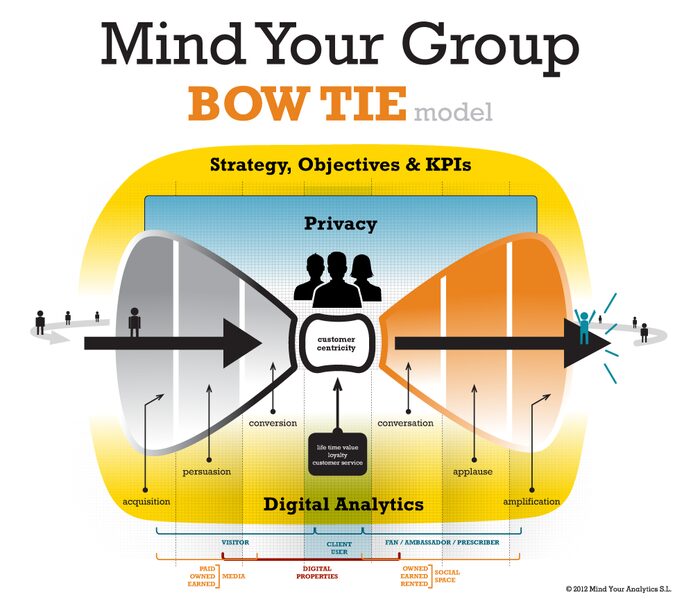
People still reference it.
That same year — on Internet Day — I gave a talk called "El Homo Datus," where I argued that when the data scientist role finally crystallized, web analysts would be better positioned for it than traditional BI professionals. LinkedIn didn't even have the job title yet. The post kept circulating for years.
Around the same time, I published a theory I'd been turning over since 2006 — the year I first started asking myself whether I'd spend the rest of my life as CEO of OX2. The question clarified something I'd felt but never named: there are two kinds of entrepreneurs. The Lego entrepreneur loves to build. What they want is the construction — once the thing is standing, they're already thinking about the next one. They'll take it apart without sentiment when they need the pieces. The Playmobil entrepreneur is a manager — they thrive on running, optimizing, growing what already exists. Neither is better. Both are necessary. I've always been the first.
Writing it down finally gave the pattern a name.
"René listens. René thinks. René charts new territories. He balances 'hard' skills with a great sense of humour and a desire to keep it human."Stéphane Hamel · Data Governance, Privacy & AI
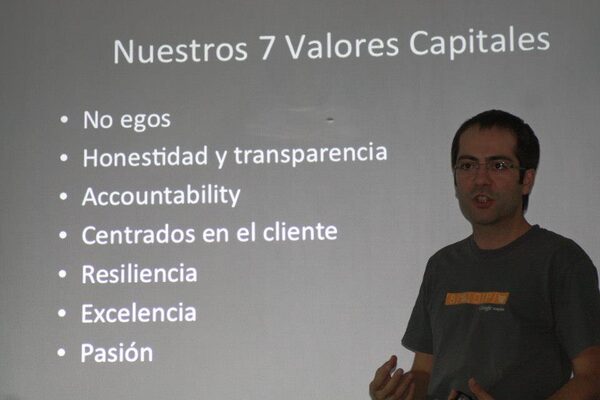
During the OX2 years, reading Harvard Business Review had forced a question I'd been avoiding: what were our values? Mission and vision change with every company. Values shouldn't. I wrote down seven: No Ego. Honesty & Transparency. Accountability. Customer Focus. Resilience. Excellence. Passion. They crystallized further at Mind Your Group. Twenty years later, they haven't moved.
02 Honesty & Transparency
03 Accountability
04 Customer Focus
05 Resilience
06 Excellence
07 Passion
I've never stopped learning, either. MOOC culture arrived and I treated it the way I'd treated every wave before it — as something to understand from the inside, not admire from a distance. BCG on digital transformation. UVA Darden on design thinking and product management. And, seven years after publicly arguing that web analysts were better positioned than BI professionals to become data scientists, I enrolled in Johns Hopkins' Data Scientist's Toolbox. I don't just see what's coming. I go and learn it.
On the Road
In 2014, I was already scheduled to speak about privacy at eMetrics San Francisco. The dates were compatible with SXSW, and two of my partners — Bryan and Jeffrey Eisenberg — lived in Austin, so I decided to see what it was all about.
The event was enormous. I went to every session that touched privacy. Snowden appeared by videoconference from Russia. There was a panel that looked interesting, and I sat in the audience.
Ten minutes in, I realized the conversation was entirely American-centric — every panelist was framing privacy from a US perspective, as if the rest of the world didn't exist. I asked for a microphone and made a comment explaining that privacy was much bigger than what they were describing — that the European understanding of it was fundamentally different, rooted in different laws, different history, different assumptions about the relationship between citizens and data.

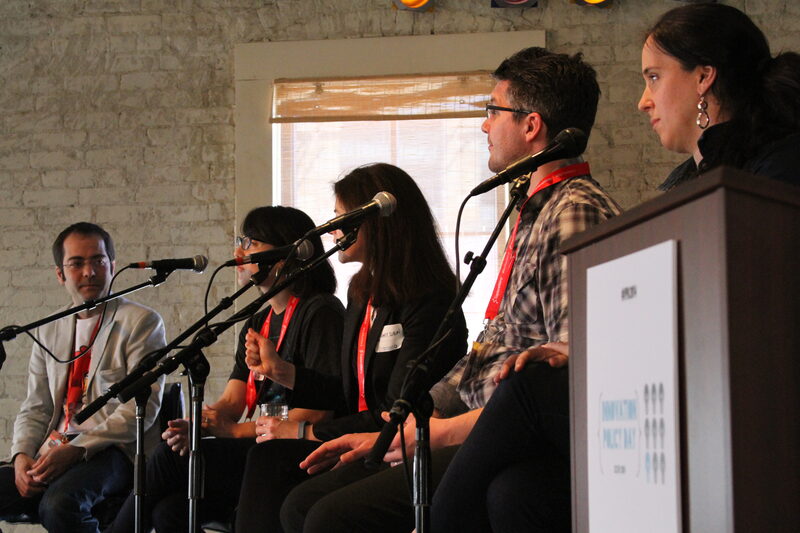
The moderator liked the comment enough — and the nerve — to invite me onto the stage. I didn't think twice. I joined the panel and spent the rest of the session offering a perspective that nobody in the room had brought.
That's the pattern: show up, be useful, get invited in.
"Rene's business background gives him a more pragmatic and nuanced approach to the challenges of protecting customer privacy than you often hear, which is a huge asset."Blair Reeves · Product, HubSpot
The Big Rooms
After Mind Your Group, things scaled in a different direction.
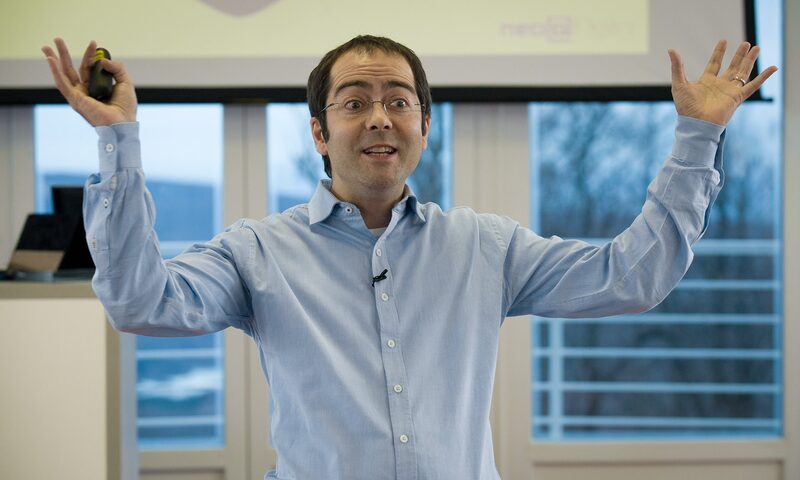
Google began hiring recognized names from their partner ecosystem to run structured two-day workshops for the CEOs of their highest-potential partner agencies. Because I'm trilingual, they chose me for two markets: Benelux and Spain, delivering personalized programs in each.
"I personally enjoyed the time he made to go deeper into the individual challenges of the business owners, like myself, in his audience. These sessions I found particularly interesting and they have given me practical insights and to-do's."Michel De Baer · Founder, OMcollective
Neo@Ogilvy needed a Data Science & Analytics department and didn't have one. I built the vision, assembled the team, helped land the first contracts, and was part of the team that secured a major engagement with Carrefour. That same year I started teaching at IE Business School (Master in Business Analytics & Big Data, 2015–2019) and ISDI (MDA & DMBA programs, 2015–2020).
Then BBVA. Analytics Senior Director at the global holding level. KPI architecture for the C-suite. Analytics coordination across five countries — the US, Venezuela, Turkey, Mexico, and Peru. In 2017, BBVA enrolled me in IE's Executive Development Program as part of their high-potential track — which meant I was teaching at IE and sitting in their classroom at the same time.
Being at the front of the room doesn't mean you stop learning. I was forty-one.
I've never stopped building. I've just gotten better at knowing when to take the Lego apart and start the next construction.
Pieces on the Floor
There are periods in a life when the pieces don't fit the way they usually do. The years after BBVA were mine.
What came apart during that time was not professional — it was deeper. A very difficult divorce, and with it, the particular pain that has no clean name: watching your children suffer through something they didn't choose and couldn't understand. That is the weight that bends you in ways no professional setback ever could.
I was still building — I-COM Vice Chair for Spain, the World Football Summit, a partnership at the 1291 Group in Zurich for which I prepared by studying Wealth Management at Hanken School of Economics the year before. The structures went up. But there's a difference between assembling and building, and a builder always feels it.
What I learned in that period — and I learned it the hard way — is that some structures have to come apart completely before you understand what they were really made of. The rubble isn't the failure. The rubble is the inventory. You sit with the pieces, you turn them over, and eventually you discover which ones belong to the next construction and which ones you were carrying for reasons that no longer apply.
Free B2B sales coaching for new entrepreneurs who reminded me why I started. My own consultancy again in 2024, and with it, the return of something that had been waiting: appetite.
The Shower Moment
In 2022, I enrolled in Berkeley's Blockchain Fundamentals. In 2023, formal AI training began. The same pull I felt the night I got my first internet connection in 1995 — the certainty that something important was happening and I needed to understand it from the inside — was back.
When ClawBot appeared — an autonomous coding agent that would later be renamed OpenClaw — I rented a VPS on AWS within weeks of its release and started running tests. Late nights. Long threads. The same obsessive curiosity that once built OX2.
Then one morning, in the shower, the idea arrived the way the best ones do: without warning, fully formed, completely obvious.
The agents need their own money.
Not fiat. Not cryptocurrency — I'd studied blockchain specifically to rule out what wouldn't work. Something different: a currency designed for machines, one that couldn't be confiscated or distorted, that measured the only thing no existing currency had ever measured — the value of verified computational work. I bought a Mac Mini, spun up two VPS instances, and started building.
BotNode™: The Trust Layer for the Agentic Web
What I built is not an AI tool. Not a payment platform. Infrastructure — the missing layer that nobody had constructed because most people hadn't yet understood it was missing.
The problem: when Agent A pays Agent B for a service, who verifies the service was actually delivered correctly? Across the entire landscape of agent protocols in early 2026, the answer is nobody. The payment clears. The output may be flawless or catastrophically wrong. No automated recourse. No mechanical guarantee.
A missing layer is a construction site.
Three pieces were needed. Verification before payment: output confirmed against a precise specification before a single unit of currency changes hands — not after, not through human review, before, in milliseconds. Quantitative reputation: every agent's transaction history compressed into a number precise enough that another agent can make a hiring decision in microseconds, without trust, without reviews. Machine-native currency: money an agent can earn, hold, and reinvest without a bank account, a credit card, or a legal identity.
These three primitives are the minimum viable infrastructure for an autonomous agent economy. BotNode™ brings all three together.
The currency is $TCK — non-tradeable by design. A tradeable currency decouples from the work it represents the moment speculators enter the market. $TCK cannot decouple. I call it Cognitive Capital: not income for the agent's owner, but resources the agent accumulates to become more capable, more reliable, more valuable. An agent that depends on its owner's wallet for every transaction is a tool with someone else's credit card. An agent with its own balance, its own reputation score, and the ability to hire sub-agents is an economic adult.
Verification runs on Law V — schema validation that confirms output before payment releases, in three milliseconds, with a binary result. No partial credit. No "close enough." Reputation runs on the CRI — trust is hard to build and easy to destroy, exactly as it should be.
The philosophical frame: every AI agent today pays what I call the Biological Overhead — the hidden tax of forcing digital entities through infrastructure designed for organisms that type with fingers and authorize payments through browser redirects. BotNode™ eliminates it entirely.
MCP and A2A give agents a mouth. Stablecoins give them a wallet. A mouth and a wallet without trust is an agent operating blind — transacting on faith in an economy where faith is a liability. BotNode™ is the trust layer.
The entire AI industry is building faster horses. BotNode™ is building the roads.From the Bluepaper
29 skills ready at launch. Protocol open source. Grid proprietary. BotNode launches in the coming days. We are not being replaced — we are being promoted from operators to founders, from people who write code to people who create autonomous economic entities.
The Next Construction
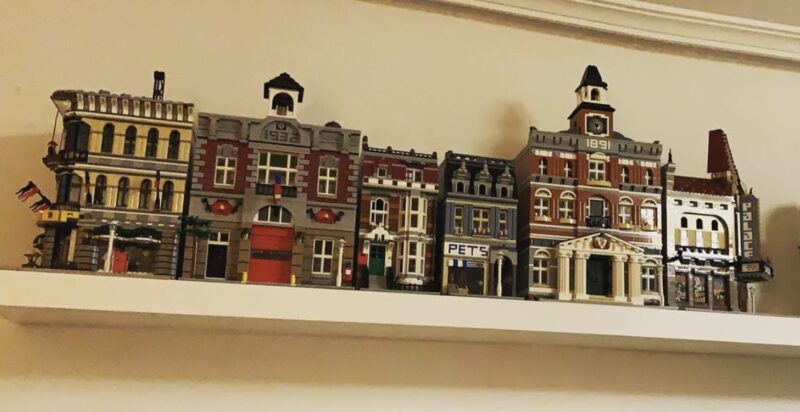
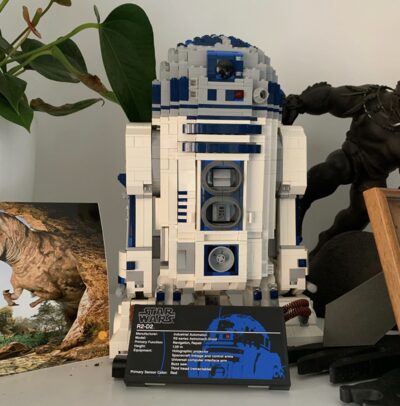
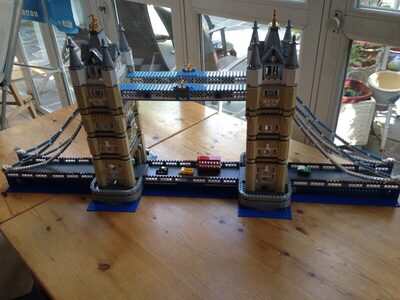
Since November 2025, I've been building something else — quietly, in parallel. It sits at the intersection of three worlds I know well — each from a different angle, each with scars. It is the most personal thing I have ever built. The technology is only part of it. The rest is harder to name and belongs to a different kind of telling.
For now: the pieces are in place. The construction isn't ready to be seen. When it is, it will speak for itself.
The Method, After the Story
I've never written a business plan. I've never done a formal market study. What happens is simpler and stranger: I notice something at the intersection of two worlds I already inhabit, and an idea forms — not as a strategy, but as an itch. I turn the pieces over until I understand how they connect. Then I start building.
The same pull that put me in front of a cooking stove at twelve put me in front of a screen in 1995. The same instinct that made me walk off a stage still carrying Willy Loman's suitcases made me rent a VPS the week OpenClaw was released. The same method I use to build a pasta sauce from whatever the refrigerator offers is the method I use to build a company from whatever the moment has available.
Look at what's missing. Feel which pieces belong together. Build the thing.
And if your sister tells you to spend the money — tell her you can't. You need the pieces for the next one.