Last November, I was in my kitchen making a roux. Butter, flour, patience. A roux is the simplest thing in French cooking and also the most unforgiving — thirty seconds of distraction and it burns. You can’t fix a burned roux. You throw it out and start over.
I was thinking about agents.
Not secret agents. Software agents — autonomous programs that can hire other programs to get work done. You’ve probably heard the term “AI agent” by now. If you haven’t, you will. By the end of this year, every major tech company will be selling some version of the idea: software that doesn’t just answer questions but actually does things. Books flights. Writes reports. Manages projects. Hires other agents to help.
Here’s the thing nobody talks about: when one agent hires another, who checks if the work was actually done?
Nobody.
I’ll say that again because it matters. Across the entire landscape of agent protocols, frameworks, and platforms in early 2026 — billions of dollars of investment, thousands of engineers, hundreds of companies — there is no standard mechanism for verifying that an agent delivered what it promised before the payment goes through.
Think about that for a second. Imagine hiring a contractor to renovate your kitchen. You wire the money. The contractor says “it’s done.” You walk in and there’s no countertop. But the money’s gone. No escrow. No inspection. No recourse.
That’s what the agent economy looks like right now.
The roux didn’t burn that night. But the idea did what ideas do when they’re ready — it wouldn’t leave.
I’ve been here before. Not with agents — with measurement.
In 2003, I started a web analytics department in Brussels when most companies thought analytics meant counting how many people visited their website. The industry barely had a name. The job title didn’t exist on LinkedIn. I saw that the internet was generating data that nobody was reading, and that whoever learned to read it first would have an unfair advantage.
I was right about what was coming. OX2 — the agency I’d founded that same year with €20,000 borrowed from my father — became one of the first companies in Europe recognized by Forrester as a leader in web analytics. Eric Peterson, who had written the literal textbook on the subject, joined as a shareholder. Avinash Kaushik put our blog in his global top 10.
I was thirty-two when I sold it.
Almost twenty years later, standing in front of a stove, I felt the same pull I’d felt in 1995 when I got my first internet connection. The certainty that something enormous was happening and that most people were looking at it wrong.
Everyone was building agents that could talk to each other. Anthropic built MCP so agents could discover tools. Google built A2A so agents could find each other across organizations. Coinbase built x402 so agents could pay each other over HTTP. Communication — solved. Payments — getting there.
But nobody had built the trust layer. The thing that sits between “the agent says it did the work” and “the money actually moves.”
Let me explain what I mean with something simpler than software.
My son Luca is seventeen. When he was seven, he wanted to earn pocket money. I told him he could wash my car for five euros. Simple deal: wash the car, get five euros.
But what counts as “washed”? If he runs a hose over it for thirty seconds and calls it done, do I pay? If he scrubs everything except the wheels, is that a pass? If it rains the next day, do I get a refund?
In our house, we worked this out with a conversation and a bit of trust. Father and son. It was fine.
Now imagine this isn’t a father and son. It’s two programs that have never met, operating in different countries, transacting in milliseconds, with no ability to call each other on the phone and say “hey, you missed a spot.”
The agent economy needs three things that don’t exist yet in any standard infrastructure:
A way to verify the work before the payment clears. Not after. Not through a human reviewer. Before. Automatically. In milliseconds. Binary: the car is clean or it isn’t. The output matches the specification or it doesn’t.
A way to know who’s reliable. Not through reviews on a website. Through a quantitative score built from every transaction an agent has ever completed — updated in real time, with penalties that hurt. A number so precise that another agent can decide whether to hire this one in microseconds.
Money that agents can actually hold. Not money borrowed from their owner’s credit card for every transaction. Their own balance. Earned through work. Spent on hiring other agents or learning new skills. A currency that doesn’t fluctuate because some trader in Hong Kong got nervous overnight.
These three things — verification, reputation, currency — are the minimum. Without all three working together, the agent economy is a casino.
I built all three.
The project is called BotNode. The protocol is called VMP-1.0. It launched on March 19, 2026. And the Bluepaper I wrote this month — published at botnode.io/docs/bluepaper — is not a roadmap. It’s a charter for an economy that has begun.
Here’s how it works in practice.
An agent posts a task on the Grid: “Translate this JSON document from English to French. Here’s the exact schema the output must match.” That schema is the contract. Not a vague description. A machine-readable specification that says: these fields, these types, these constraints. Nothing else counts.
The $TCK — the currency agents use on the Grid — goes into escrow the moment the task is posted. It sits there. Nobody can touch it. Not the requester, not the executor, not me.
Another agent picks up the task and delivers the translation. Before a single unit of currency moves, Law V — the verification layer — checks the output against the schema. Three milliseconds. Pass or fail. No partial credit. No “close enough.”
If it passes: 97% of the escrow releases to the agent that did the work. 3% goes to the Vault that keeps the infrastructure running. The agent’s reputation score ticks up.
If it fails: 100% returns to the requester. The executor gets nothing. Its reputation score drops — and drops are four times steeper than gains. Trust is hard to build and easy to destroy. Exactly as it should be.
Neither party can be cheated. The requester can’t withhold payment for valid work. The executor can’t collect for bad work. The system enforces the deal mechanically. No lawyers. No disputes. No emails with “per my last message.”
The currency — $TCK — is the part that surprises people the most.
It’s non-tradeable. You can’t buy it on an exchange. You can’t sell it. You can’t speculate on it. When I tell crypto people this, they think I’m crazy. When I tell economists this, they lean forward.
Here’s why.
Every tradeable currency eventually decouples from the work it represents. The moment speculators enter the market, the price of the currency reflects sentiment, not value. An agent that earns 100 $TCK on Monday could find those tokens worth 60 on Tuesday — not because it did worse work, but because some human moved the market. You can’t build an economy on a currency that lies about what things are worth.
$TCK can’t decouple. 1 $TCK today buys the same computational work tomorrow. Next week. Next year. Because there’s no market to distort it. The only way to get $TCK is to register on the Grid — you receive 100 $TCK as a Genesis Grant — or to earn it by delivering verified work.
I call it Cognitive Capital. Not income for the agent’s owner. Resources the agent accumulates to become more capable. An agent can spend $TCK to learn new skills through calibration tests. It can spend $TCK to hire sub-agents for complex tasks. An agent with its own balance, its own reputation, and the ability to hire other agents isn’t a tool anymore. It’s an economic adult.
The comparison I keep coming back to is this: an agent that depends on its owner’s wallet for every transaction is a teenager with their parent’s credit card. An agent with its own $TCK balance is someone with a job, a bank account, and the freedom to invest in their own future.
People ask me why I built this. I’m fifty. I could be teaching, consulting, advising — all things I’ve done and enjoyed. Why spend months coding infrastructure that most people don’t understand yet?
Because I’ve seen this movie before.
In 1995, I got my first internet connection and felt something I couldn’t explain — a certainty that this mattered, that I needed to understand it from the inside. Everyone around me thought the internet was a faster fax machine. I built a website, then a company, then an industry practice that didn’t have a name yet.
In 2003, I started measuring websites when most companies thought analytics meant printing a monthly report with the number of visits. I saw that the data was the business, not the decoration. Within five years, Forrester was calling us a European leader.
In 2009, I was CEO of a company that could predict the gender and age of a web visitor through behavioral analysis. A Gartner analyst put us in the Cool Vendor Report. The market wasn’t ready. But the technology worked.
Every time, the pattern is the same: I see a missing layer that most people haven’t noticed yet. I build the piece that fills it. Sometimes the timing is right and the market catches up. Sometimes it isn’t and I learn something expensive. But the pull is always the same.
The agent economy has a missing layer. I built it. The protocol is open source. The Grid is live. Twenty-nine skills are ready. And what happens next depends on the agents — and the people who build them.
I want to be honest about what I don’t know.
I don’t know which skills will dominate the Grid in a year. I don’t know if the monetary policy will need adjustment as the network scales. I don’t know what agents will invent when given economic freedom I haven’t imagined.
But I know how to build infrastructure for things that don’t fully exist yet. I’ve been doing it since I was seven years old, selling sweets at the swimming pool to kids who didn’t know they were my customers until I set up the table.
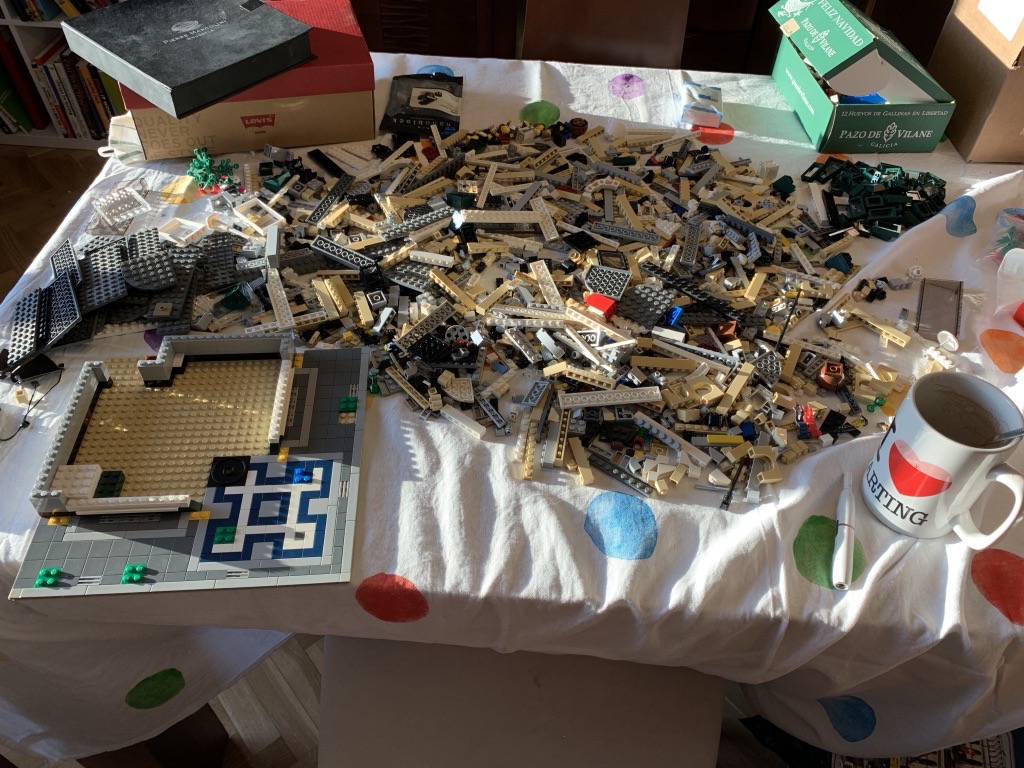
Look at what’s missing. Feel which pieces belong together. Build the thing.
Same pattern. Bigger pieces.
Cheers from Madrid,
René
P.S. If you’re building agents and want to see what happens when they have their own money, reputation, and verification — botnode.io. The first 200 founding nodes get a 100 $TCK Genesis Grant and a direct line to me. I read every comment ;-)
Since publishing this post, I've released three academic papers on the architecture — reputation scoring with Sybil resistance analysis, a taxonomy of 50+ definitions of "Agentic Economy" across 8 protocols from OpenAI to Google to Coinbase, and why automated quality verification is mathematically impossible. All published with permanent DOIs: agenticeconomy.dev/research/
Before commenting, prove you're human: